
Imagine scanning a QR code so small it’s invisible to the naked eye—thinner than a strand of human hair. Recent breakthroughs in nanotechnology and microfabrication have made this possible, pushing the limits of how we store, encode, and retrieve information.
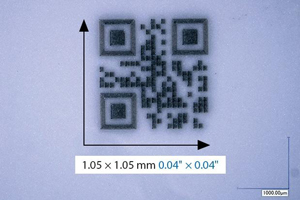
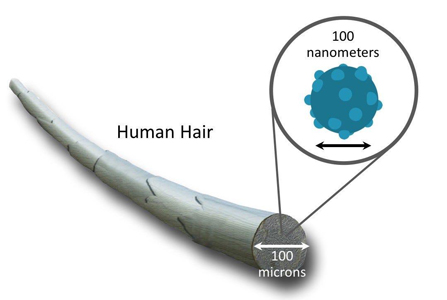
Researchers have successfully created nano-scale QR codes using advanced lithography techniques, achieving structures measured in micrometers and even nanometers. For context, a human hair is typically 70–100 micrometers wide—meaning these QR codes can be hundreds of times smaller.
 |
 |
 |
 |
Creating such ultra-small structures requires cutting-edge fabrication technologies, including:
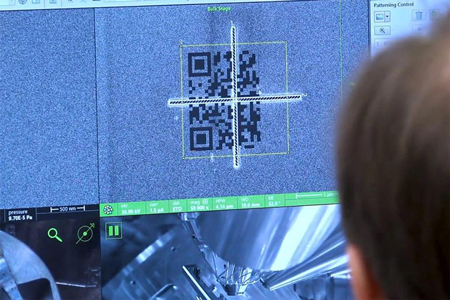
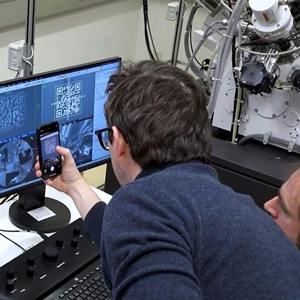
These methods allow engineers to encode QR patterns into surfaces like silicon wafers, metals, or polymers, maintaining readability under high-resolution imaging systems such as scanning electron microscopes (SEM).
This isn’t just a lab curiosity—it builds on a broader trend in ultra-dense data storage:
In comparison, nano QR codes represent a bridge between physical encoding and machine-readable data, combining visual structure with extreme miniaturization.
Nano QR codes could encode information directly onto materials—turning any surface into a data carrier.
Because they are nearly impossible to replicate without specialized equipment, nano QR codes can serve as invisible authentication tags for:
Imagine embedding microscopic QR codes on medical implants or drug carriers, enabling:
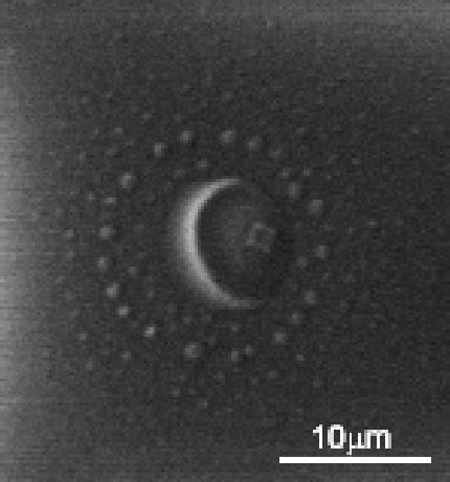
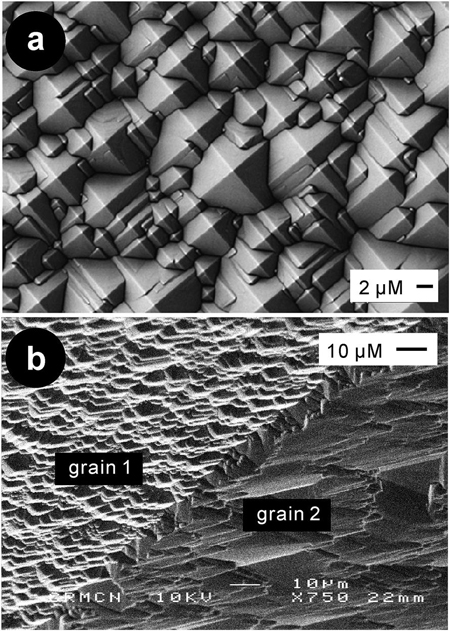
These structures are not only functional—they’re visually striking under magnification, making them ideal for:
 |
 |
Despite the promise, several hurdles remain:
However, as imaging and fabrication technologies evolve, these limitations are expected to shrink—just like the QR codes themselves.
We are entering an era where information is no longer just stored—it is embedded, hidden, and seamlessly integrated into the material world.
The world’s smallest QR code is more than a technical achievement.
It’s a signal of a future where:
Data lives everywhere—on every surface, at every scale.
Anhui Province Academy of Science and Technology, No. 128,Wanshui Road, Hi-Tech Zone, Hefei City, Anhui Province, China
 +86 17354022649
 service@sondii.com


 IPv6 SUPORTADO POR REDE
Nosso horário
Seg, 21/11 - Quarta, 23/11: 9h - 20h
Qui, 24/11: fechado - Feliz Dia de Ação de Graças!
Sexta-feira, 25/11: 8h - 22h
Sábado, 26/11 - Dom, 27/11: 10h - 21h
(todos os horários são horário do leste)